Fostering Missional Thinking in the Classroom
- Posted by Jerry Causey
- Date April 10, 2026
- Categories Education, How To, Impact, Online Learning
Certainly, we recognize that the church—the Christian church or a local body of believers—is called, even commanded, to be missional. The last words Jesus spoke and left with His disciples (which extends to us modern-day disciples, too) was to go and make disciples. As we go, whenever and wherever we go about our daily routines and activities, we take with us the wonderful good news of salvation and of the abundant and eternal life that one can have in Christ Jesus. In short, we are commissioned to be on mission: missional.
But what about “as we go” in our work? Are we supposed to neglect His command and divorce our call to mission from vocational activities? And particularly we who are in a school setting, do we ignore the call and command to be on mission for our Lord by just concentrating on reading, writing, and arithmetic (that is to say, whatever discipline we are employed to teach)? In a public school setting, there probably are arbitrary lines drawn between teaching and sharing one’s faith, but what about in a Christian school setting?
Likely a primary purpose of any Christian school expressed in its mission statement is:
- to make Christ and Christlikeness known;
- to nurture more than just academic excellence but to also foster spiritual growth and godly character; and
- to help equip students to serve the Lord and make His glory known.
Plainly, at the heart of such a school’s purpose is indeed the Great Commission. A Christian school puts to paper the importance of its faculty and staff connecting spiritually with students.
Quite obviously then, we in Christian education take seriously the call to be missional as we work and relate with our students (either face-to-face or in an online capacity). Our instruction is more than just reading, writing, and arithmetic—or it should be. We should be making Christ known and nurturing and fostering and equipping, as most all our mission statements require in some way.
The Great Commission
Go ye therefore, and teach all nations, baptizing them in the name of the Father, and of the Son, and of the Holy Ghost. Teaching them to observe all things whatsoever I have commanded you: and, lo, I am with you alway, even unto the end of the world. - Matthew 28:19-20
We are commissioned to be on mission: missional.
A primary purpose of any Christian school is expressed in its mission statement.
Our instruction should make Christ known and spiritually nurture and foster and equip.
Affecting human behavior: Where does it start?
But is that what we in fact do?
Do we, as we go and instruct students, do all we can to cultivate missional thinking within ourselves and our colleagues and the students of our classroom?
How do we cultivate missional thinking in the classroom?
Someone has said that there are only two ways to influence human behavior: You can manipulate it or you can inspire it.
To manipulate others seems contrived, that is, forced, false, and artificial, like a soul that becomes religious but without the leadership of the Holy Spirit. Salvation is not real or enduring when the person who comes is manipulated into receiving it.
To inspire—the other way to affect human behavior—is the antithesis of manipulation. Such changes in human behavior are more permanent. Whether within us or others, inspirational change is:
- free not forced
- true not false
- and authentic rather than artificial
And as Christian believers, we know that salvation and enlightenment come as inspiration, which is a work of God’s own Spirit (the third person of the triune Godhead, the Holy Spirit).
To be on mission, to be missional, then comes first by being a person sensitive to the call of God and being dependent on His indwelling Spirit. A missional person is reliant on continued and sustained obedience to the leadership of the Holy Spirit. We cannot, in whatever capacity we work vocationally, cast godly influence on others and affect spiritual change unless when we examine ourselves, we are found to be free, true, and authentic. Success in cultivating missional thinking relies on God-given inspiration.
Cultivating missional thinking in the classroom thus begins in and with us as called educators, staff, and administrators. Here is our start: We are called, commissioned, and inspired sowers going forth, tending the soil, seeking a harvest. To be successful in cultivating missional thinking, we must be dedicated, deliberate, and intentional in our work, recognizing that the yield depends on the soil (that is, the students to whom we are entrusted). Work and soil are inextricably linked. The work is pretty much constant; students vary, though, just as soils differ.
Be it deep or shallow, red or black, sand or clay, the soil is the link between the rock core of the earth and the living things on its surface. It is the foothold for the plants we grow. Therein lies the main reason for our interest in soil. – Roy W. Simonson, Twentieth Century Soil Scientist and Educator
To be successful in cultivating missional thinking in students, we must first know our soils. By nature, educators are dedicated. It is not work that ends, as with other vocations where work stops when the door shuts at day’s end. Good instructors take work home, and frequently that “work” involves an inquisitive personal interest in students: who each one is and how our instruction can have a better influence and impact on them. How do our actions achieve a desired effect or fulfill an aim or goal? How can we be more deliberate, leading students to that desired effect, and most importantly inspire them spiritually? We ask these questions and then with godly wisdom intentionally personalize our interactions with our students.

To be missional in the classroom (whether traditional or online) and create missional thinking is to nurse a deliberate and intentional spiritual interest in our students.
To best know our soils—our students—it is vital that we look and listen. As trite as it may seem, the familiar saying holds true: There is none so blind as the one who refuses to see; none as deaf as the one who refuses to listen and hear. To be missional and cultivate missional thinking we must look and see, hear and listen to what students say. Sometimes what they do may be so blindingly bright that it cannot help but be seen. At times what they say can seem ear-piercingly loud. One student that I am currently teaching (online), in responding to a Welcome Meeting survey question admitted “I am not a big religion guy”; and elsewhere, when asked what prayer requests he might share, frankly and yet politely responded, “No thanks, I am not religious nor Christian. I’m sorry but I don’t believe in religion and prayers, so I won’t be requesting anything. But if you still do prayers, I will still take the words!”
Though instructing in a Christian setting, we would be remiss in thinking that all students alike have come to peace and reconciliation with our Maker through justifying faith and forgiveness in Christ Jesus (Romans 5:1–11).
Some students may be perishing and stand already condemned (John 3:18); so in prayer, let us seek the best Spirit-led means to share our faith and the good news of salvation.
Whoever believes in him is not condemned, but whoever does not believe stands condemned already because they have not believed in the name of God’s one and only Son. - John 3:18
That is the basis for cultivating spiritual thinking. In a feedback message to my student, I as frankly and honestly as he replied to me disclosed to him: “I don’t think prayers avail much unless you know God, believe in Jesus His Son, and have a relationship with Father God through Christ Jesus the Son.” In effect, prayers outside that relationship, as my student unwittingly noted, are just words. My hope is that through my instructor-student relationship I can plant the seeds of salvation across his enrollment in class!
Is it less than credible to suggest that an instructor-student relationship is at the heart of cultivating student-soil? As the farmer seeks a harvest from his inextricable relationship to his soil, educators likewise cultivate spiritual and missional thinking within their students by growing a relationship with them. As noted, for both the farmer and the instructor, it is in our relationship that we find the “foothold for the plants we grow.” In relationships, in that foothold, our students can come to flourish and grow and bear fruit academically and spiritually.

Offering a Christian testimony is a powerful way we can share the saving grace of Jesus with others. Especially through the power of the Holy Spirit, testimony connects with others, and it demonstrates the saving and transforming power of grace and mercy and forgiveness. Sharing a testimony is important because it not only tells of our own personal experience with God through Christ, but it also affirms how God works in the world and in the lives of His human creatures. Also, our testimony is a means of doing what we are commissioned to do, as we go on our way day to day.
Living out our lives here on this earth, we witness perhaps verbally—but certainly nonverbally—our faith and spirituality. And even if those who see and hear are already believers, sharing a testimony further enhances not just the faith and confidence of the one who shares, but maybe more importantly, the ones who hear. A shared testimony among believers strengthens our relationship with one another and with God Almighty. And, sharing our faith and faith experiences serve to inspire and uplift others, and offer an opportunity to express our devotion and gratitude to God through shared experiences.
Such is not just relegated to a relationship spiritually within the church. We find a way to build the special kind of relationship with students that cultivates missional thinking within the classroom. Though there might be that arbitrary line within a public school that stifles this special spiritual relationship, we in Christian education can full-throttle our faith and expressions of it without fear of reprisal, reprimand, or recrimination. Our faith-based relationship could indeed be the foothold in which a student-plant grows and flourishes.
Across the many semesters that I have taught, including summers, too, I particularly remember this one history student. Although in an online capacity, and never in fact meeting her face-to-face, she shared concerns and issues sometimes common to a new Christian. I don’t remember two to three years later any specific questions and concerns or even my answers, counsel, and specific spiritual support, yet at the end of the summer session, poised to return to her “brick and mortar” traditional school setting, she shared these most special thoughts with me:
I am doing great! I want to thank you for aiding me in my walk with Christ throughout this summer. In the beginning, I found myself confused and uncertain almost constantly, and you helped me through that. I am now going into this school year, with His help thanks to you and so many others in my life. I cannot thank you enough for the advice and role that you have taken in my life over the last couple of months.
Commissioned and Commanded and Called to Be Missional—You Bet!
In our Christian school setting, we get all kinds of students—shallow and deep and some clay and some sand. Jesus, during His ministry, met people where they were and related to them in their need both physically and spiritually. In a similar way, as we explain reading, writing, and arithmetic, we must see and recognize more than just a student’s temporal needs; our students have spiritual needs. We meet them where they are and throughout the school semesters strive to bring them further along, certainly in their academic pursuits but in their spiritual walk as well. We are to be a positive change-agent of the true and enduring Agent of Change.
Cultivating missional thinking in the classroom then depends first and foremost on the empowering leadership of the Spirit of God. He through us inspires effective change and brings true missional thinking. Even so, as the hymn of old bids us, we are called “to the work, to the work!” We are to “do with our might what our hands find to do.”
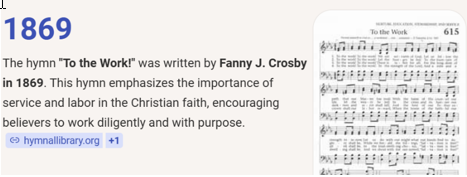
And what we instructors find to do is nurture and guide, mentor and equip, and foster and facilitate student learning and spiritual and missional thinking according to our Christian mission statement. Accomplishing that mission relies on our relationship with our students, which must be built intentionally and deliberately through getting to know each one and learning how best to relate to them. Sharing our own faith and faith-based experiences and demonstrating a true Christlike life-walk provide a means through which we enhance spiritual and missional thinking in our students.
Are we not called to go and make disciples? Should we do anything less as servants of God than obey His call, even as instructors in the classroom (be it real or virtual)? Shall we not be then about “toiling on”?
We are called to the work of sharing our faith whenever and wherever we go. Let us “labor till the Master comes,” and may we educators be found faithful in cultivating missional thinking in the classroom.

Jerry Causey has been an instructor at Sevenstar since 2015. He holds degrees in English and History and has completed theological studies at New Orleans Baptist Theological Seminary. He believes the study of history helps students understand both the challenges and the progress of humanity, viewing history as part of God’s unfolding story throughout creation.
You may also like